A Pantry Shelf, Read Before the Shop
A pantry shelf check turns what you have into a focused grocery note, helping you avoid duplicates and choose package details that fit planned meals.
You reach for a can of beans and find another tucked behind the rice. A pantry shelf check before shopping turns that small surprise into a useful grocery note: what is on hand, what is missing, and which package detail matters for the next meal.
The aim is not to catalog every crumb. Check the foods you use or plan to use, then carry forward only details that could change a buying decision. A phone note or scrap of paper is enough; neither requires a ceremonial spreadsheet.
Sort by planned use
Choose a shelf group, such as canned goods, grains, or baking supplies. Pull forward open packages and place similar foods together so you can see what is usable without emptying the cupboard onto the counter.
For each item, connect what you see to a likely use: a meal you intend to make, a regular household staple, or a clear restock need. An open bag of rice may be sufficient for dinner; a nearly empty carton of broth may belong on the list if a soup is planned. If you cannot name a use or a reason to restock, leave it off for now.
Check package condition and follow its storage directions. If a date is unclear, a seal is damaged, or you have a food-safety concern, consult the manufacturer’s guidance or an appropriate qualified source rather than guessing.
Write useful distinctions
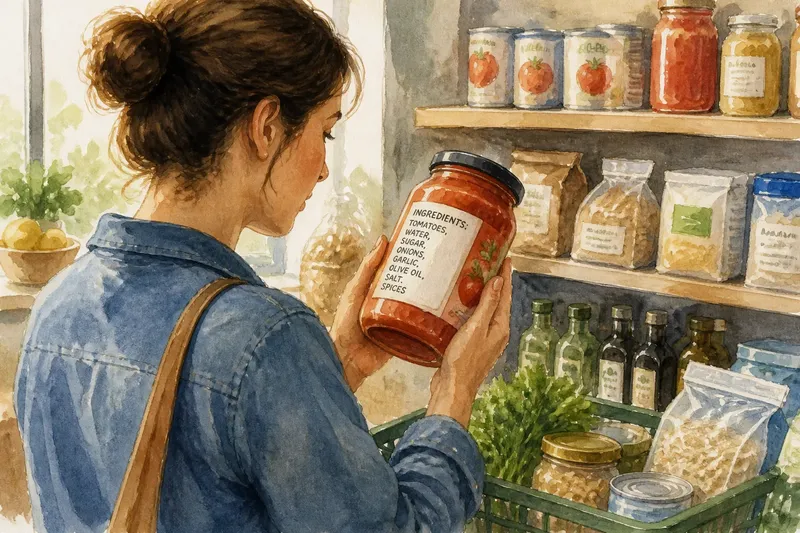
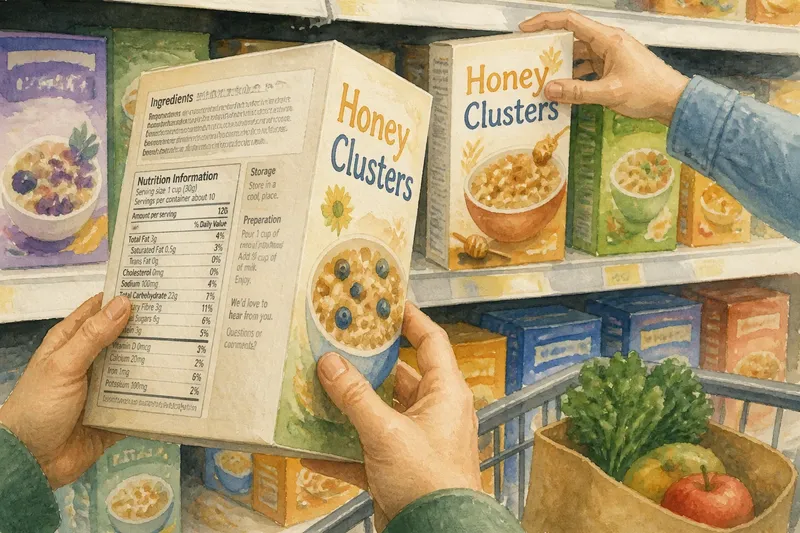
A good note says what you need to recognize, not what a package looked like last time. For example, write “plain canned beans” if seasoning matters, or “small pasta shapes for soup” if the form matters. The front panel can help identify a product, but the ingredient list and other package information are more useful when you need to confirm a specific detail.
- Product form: note whole, sliced, dried, frozen, or ready-to-eat when the form affects the planned use.
- Ingredient or flavor: record a detail such as plain, seasoned, or sweetened if it would change your choice.
- Package format: note a can, jar, carton, or resealable bag if storage or handling depends on it.
- Storage direction: record whether the package needs refrigeration or freezing when that affects where it can be kept.
- Meal fit: specify a shape, texture, or preparation form that suits the dish you have in mind.
Each note should lead to a decision. If you cannot say what you would choose differently after checking the package, the detail probably does not need to travel with you.
Use a focused shelf check
For a routine trip, keep only entries tied to a planned meal, a repeated household use, or a clear restock need. For an uncertain meal plan, make the note smaller rather than trying to predict every possible dinner. If several people use the pantry, write observable descriptions such as “open bag behind cereal” instead of “some flour.”
Use whichever format you can update easily. A phone note is convenient if you already carry your phone; a paper list works if it lives near the shopping bags. A photograph can show a crowded shelf, but it is less helpful for a detail that is hidden on the back of a package.
Before leaving, review each line and decide what action it calls for. The following checks keep the note tied to visible facts:
- Open package: Check whether it is usable for a planned meal. If it is, leave it off the list; if it is not, add a replacement only if the meal or regular use still calls for it.
- Low staple: Check the amount against your expected use. If it will cover that use, skip the purchase; if it will not, add the specific staple.
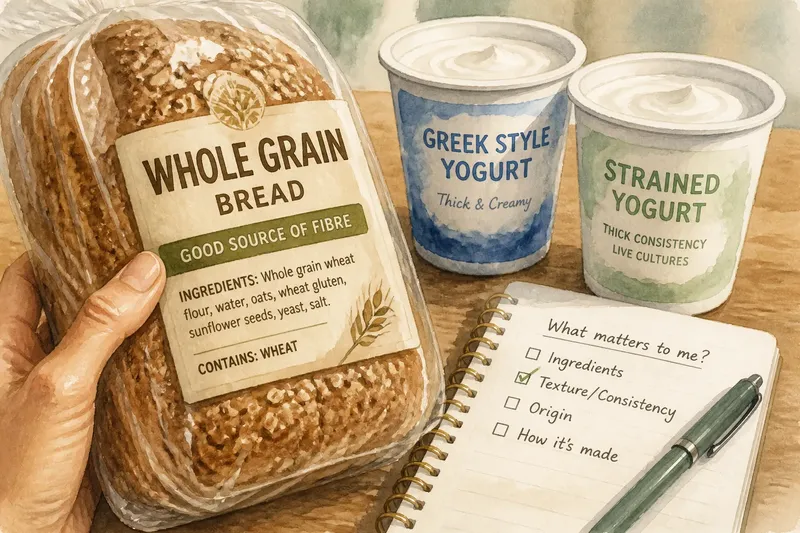
- Similar products: Check which difference matters, such as plain versus seasoned. If the distinction affects your use, write it down; if not, treat them as interchangeable for this trip.
- Package condition: Check the seal and visible condition. If either raises a safety concern, do not rely on the item; if the package appears suitable, follow its stated storage directions.
- Unclear wording: Check the ingredient list or product information for the detail you need. If it answers the question, use that information; if it does not, leave the choice open or seek appropriate guidance when the detail is consequential.
- Uncertain meal: Check whether the food has another clear household use. If it does, list it for that use; if it does not, leave it off rather than shopping for an imagined menu.
Work through one shelf
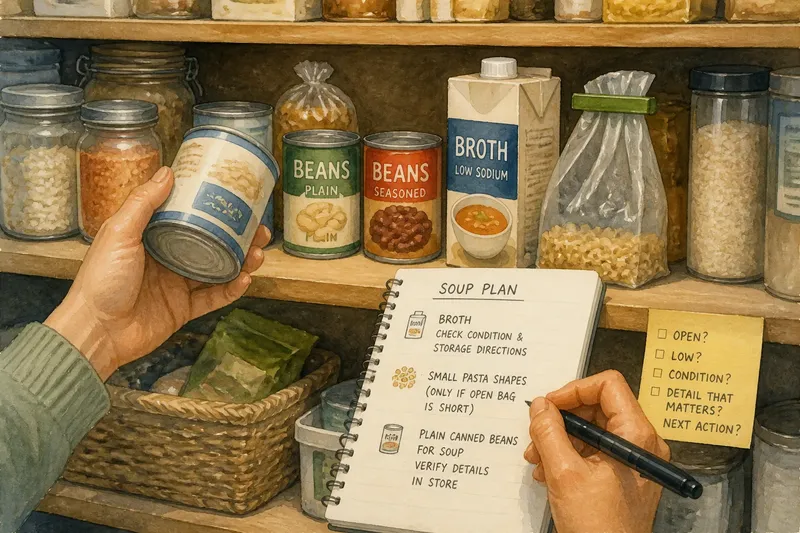
Say you plan to make soup and find an open carton of broth, a nearly empty bag of small pasta, and two cans of beans: one plain and one seasoned. These are invented details for the example, not a report about an actual pantry.
First, check the broth’s package condition and storage directions. If it appears suitable and its directions allow the way it has been kept, keep it in the meal plan; if not, set it aside and consult the package guidance before deciding whether to replace it. Next, check the pasta against the amount your soup requires. If the remaining pasta is enough, leave it off the list; if it is short, note “small pasta shapes.” Finally, decide whether the soup calls for plain beans. If so, note “plain canned beans” and verify the relevant package information in the store; if seasoned beans would also suit the meal, skip that comparison.
The resulting note is specific: “small pasta shapes, only if the open bag is short; plain canned beans for soup.” It avoids buying a second carton by default and leaves the bean choice tied to the meal rather than a persuasive package phrase.
Questions about pantry checks?
Should I list every package?
No. List only what could change a purchase or a planned use. A full inventory can become outdated as soon as someone opens a package.
What if I forget the exact product?
Write the distinction that matters instead of guessing at a brand or package design. “Unsalted broth for soup” is clearer than a remembered label color if salt level is the relevant detail.
Can a pantry photo replace a note?
A photo can help you recognize a crowded shelf, but it may not show an ingredient list or storage direction. Add a short written prompt when you need to check a specific detail.
What if a label detail affects health?
Read the information on the package you are considering, since wording and ingredients can change. For an allergy, medical need, or other consequential choice, consult a qualified professional where appropriate.
Let the shelf guide
A pantry shelf check is most useful when it turns a vague memory into an observable fact and a clear next action. Note what is open, low, or absent, then carry only the package detail that could alter the choice.
At the store, let the note guide rather than dictate. If a product has changed or the meal has shifted, decide again from the food’s intended use and the information on the package in front of you. The cupboard may still be untidy; at least the list can be plain and accurate.