When a Food Word Changes Meaning
When a food word changes meaning, learn to tell everyday usage from label language and find the details that answer your question before choosing.
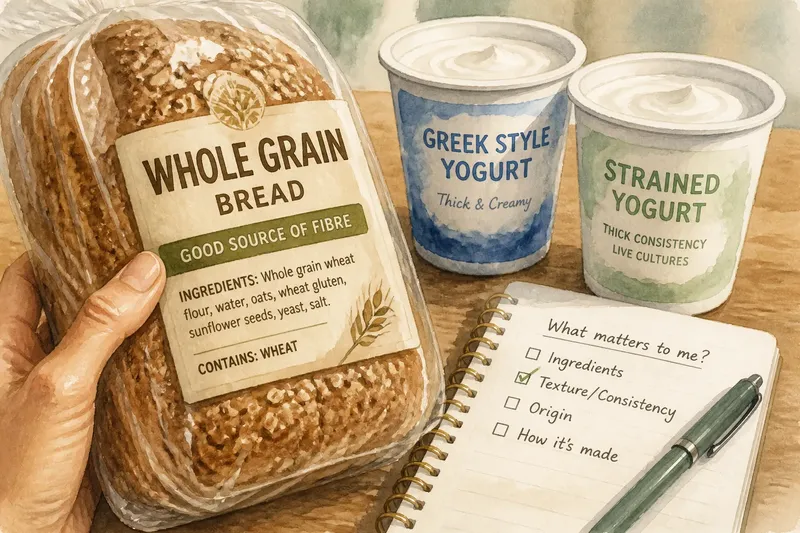
You reach for a loaf labeled “whole grain” and pause: does that phrase describe every grain in the bread, or just one part of it? When a food word changes meaning, its context matters. The product category, exact wording, and applicable rules can all shape what a label term communicates.
Start with the word’s job
A food word can name a product, describe a quality, make a claim, or add appeal. “Creamy,” for instance, might describe texture in a product name or appear as part of a claim; the word alone does not tell you which job it is doing.
Check where the word appears and what surrounds it. A product name identifies or describes the food, while a slogan may be written mainly to catch your eye. Placement is a clue, not a verdict.
Everyday and label meanings
People often use food words loosely in conversation. Someone might call a fruit spread jam, jelly, or preserves according to family habit, while a product label uses a more specific description. The terms can overlap in ordinary speech without being interchangeable in every product context.
“Whole grain” illustrates why context matters. People sometimes use it casually for bread that looks brown or hearty, but on a label the phrase is intended to communicate something more specific about the grain ingredients. Its precise meaning can depend on the product and applicable rules, so color alone cannot settle what the wording means.
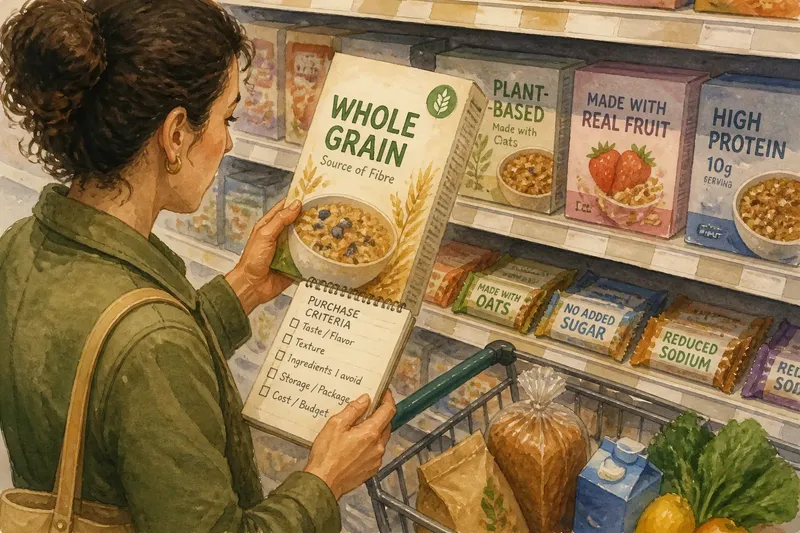
“Natural” can suggest simplicity in everyday conversation, but the word by itself does not describe every ingredient or processing choice. “Fresh” also shifts with context: its use on a package may not answer exactly how the food was handled. Treat such terms as prompts to check the details, not as complete descriptions.
Follow the useful detail
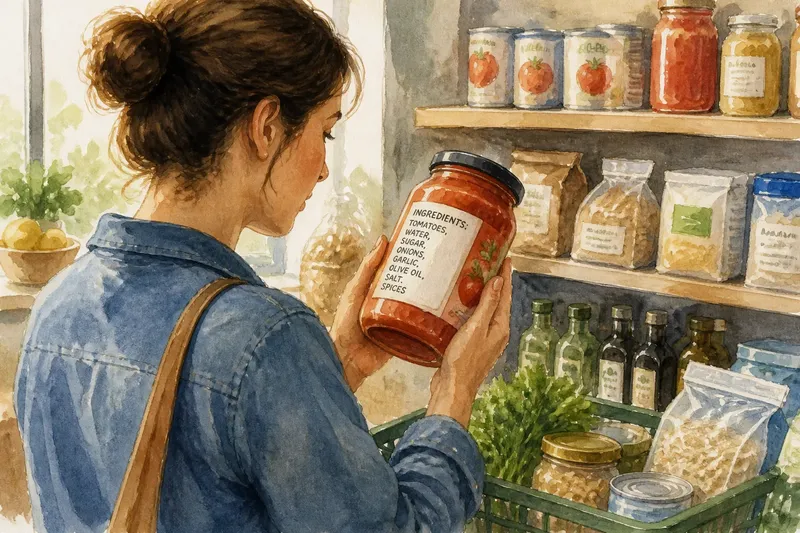
First decide what you need to know: what the food is, what it contains, how it was made, where it came from, or how it may taste. Then look for the label information that addresses that question. Ingredient information is more useful for checking a particular ingredient; explicit origin wording is more useful for checking where a food came from.
Compare like with like. A phrase such as “Greek style” may describe a product’s style, but it does not by itself establish its origin or settle every question about its contents. If you want a particular texture for a recipe, look for product details that address texture rather than drawing a conclusion from the phrase alone.
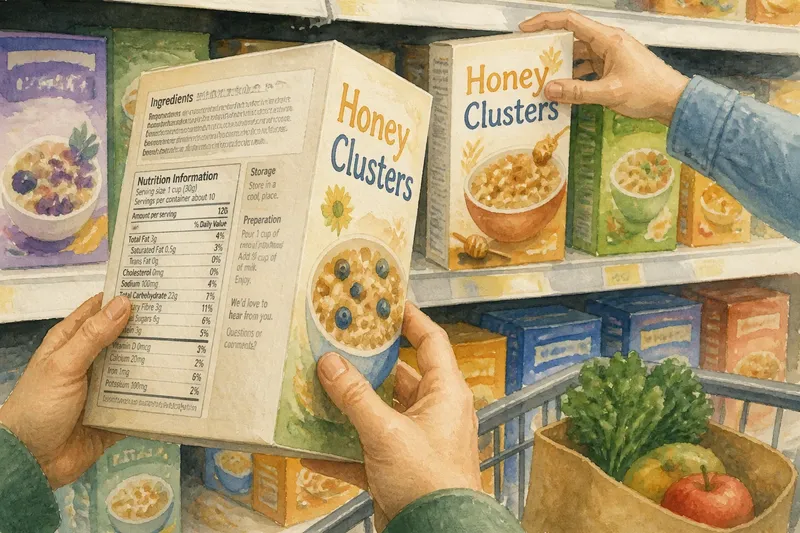
- If a word appears in the product name, check the product description; if it still leaves the food’s identity unclear, compare the other label details before choosing.
- If “whole grain” is your reason for considering a loaf, check the grain wording and product information; if those details do not answer your question, consult applicable label guidance rather than judging by color.
- If “natural” suggests a feature you care about, check the ingredient information and the wording of the claim; if the feature remains unspecified, do not treat the adjective as an answer.
- If “fresh” matters to your choice, look for wording that explains the relevant handling or product characteristic; if none appears, ask the manufacturer or choose based on a detail the label does state.
- If origin matters, look for explicit origin wording; if the package does not provide it, ask the manufacturer instead of inferring origin from a borrowed or traditional-sounding name.
- If a term seems to promise a particular texture, check the product description; if the description does not address it, compare another product whose stated characteristics better match your need.
Say you are choosing between two tubs of yogurt for a recipe and want a thick texture. One tub says “Greek style,” while the other describes itself as strained. You check both product descriptions and find that only the second explicitly mentions a thick consistency; you choose it for the recipe, while recognizing that the first phrase alone did not settle the texture question.
Words across settings
A word can travel from a home kitchen to a menu and then to a retail package. A recipe may use “stock” and “broth” according to its own cooking instructions, while a product label reflects the maker’s chosen description. If a dish depends on a particular flavor or consistency, compare the stated product details rather than assuming the terms mean the same thing everywhere.
Borrowed culinary words can carry cultural associations while being used more broadly in English. A name may evoke a style without stating where the food was made. If origin is your question, look for origin wording rather than relying on the name’s sound.
Questions about food words?
Does every food word have one official meaning?
No. Some terms have defined uses in particular contexts; others remain ordinary descriptions. Check the product category and the wording around the term, and consult applicable label guidance when a formal meaning matters.
Can a product name tell me every ingredient?
A product name may identify the food or describe its style, but it is not a complete ingredient list. Check the ingredient information when a particular ingredient affects your choice.
What if two packages use the same word?
Read the surrounding wording on each package and compare the details relevant to your decision. The same term can serve different purposes on different products.
When should I contact the manufacturer?
Ask the manufacturer when the label leaves a product question unanswered and that answer matters to your decision. For allergy or health concerns, seek appropriate guidance from a qualified professional rather than relying on a broad descriptive word.
Make the decision traceable
When a food word catches your eye, identify its job and the detail that could answer your question. For ingredients, check ingredient information; for texture, look for a description of consistency; for origin, seek explicit wording. If the package does not provide the detail you need, ask the manufacturer or choose using information it does provide.
For “whole grain” and other terms that may have narrower uses, remember that product type and applicable rules can matter. Reading the phrase alongside the relevant product details is more reliable than relying on appearance or an everyday definition.