Ingredient Lists Read from the First Line
Ingredient list order helps you compare similar foods and spot ingredients you care about, while keeping its limits clear when choosing what to buy.
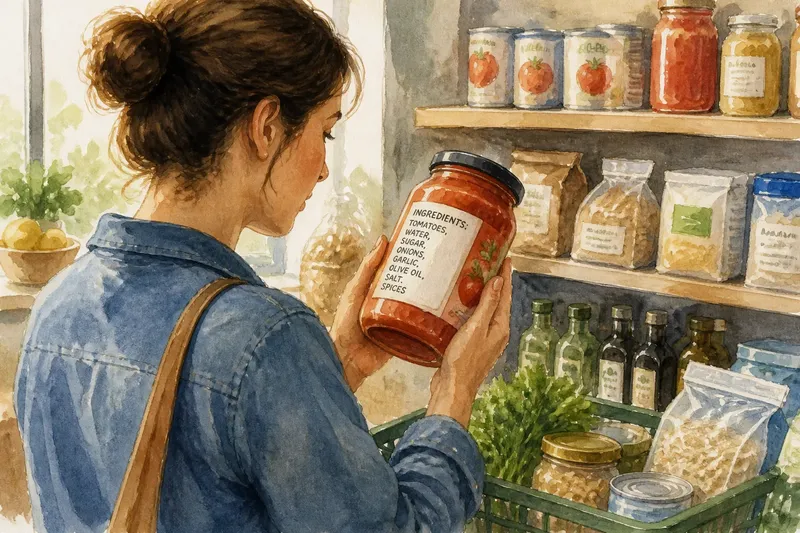
You turn a jar of pasta sauce around and see tomatoes, water, then sugar. On most packaged foods covered by U.S. labeling rules, ingredients are listed in descending order by weight, with some exceptions and special rules; the sequence is a clue to composition, not a verdict on the food.
What ingredient order shows
For products using the standard order, the first ingredient weighs more than the second in the formulation, the second more than the third, and so on. The list does not give exact amounts, and product-specific labeling rules can affect how ingredients are presented.
That makes order useful for a narrow comparison, such as checking which of two similar breads lists oats earlier. It does not rate nutrition or quality, and it cannot tell you how a product fits into a meal.
Why the first item misleads
A first-listed ingredient does not describe the whole product. A loaf may list wheat flour first, while water, seeds, salt, and other ingredients shape its texture and taste.
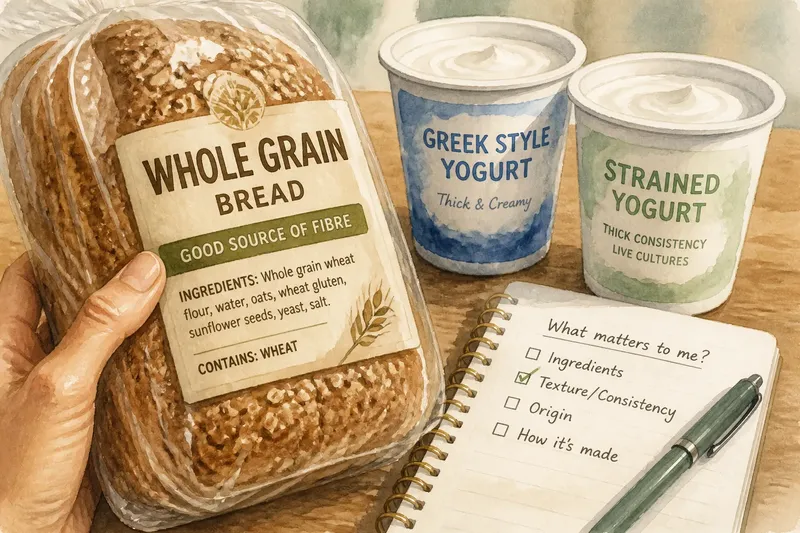
Read the whole list, then consider the product name and your reason for comparing it. If seed content matters, check whether seeds appear in both bread lists and note their position; treat that as a rough clue, not a quantity.
Water near the top
Water is heavy and common in soups, sauces, drinks, and other moist foods. Its position alone cannot tell you whether a product is nourishing, thin, flavorful, or suitable for a particular use.
Consider the kind of product and what you need from it. In canned soup, water or broth near the top is unsurprising; ingredients such as beans or noodles may still be central to what is in the bowl. For a beverage, compare the ingredient list with its stated type rather than treating water as a quality score.
Related ingredients
Ingredients from the same broad family may appear under different names. A cereal could list sugar, honey, and syrup separately; their order does not reveal a combined amount. If you need nutrient information, use the Nutrition Facts panel and its serving information.
Compound ingredients
Prepared components such as chocolate, broth, or seasoning blends can contain ingredients of their own. A label may show the component followed by its ingredients in parentheses. Read those details as a description of that component, not as a precise account of each sub-ingredient’s amount in the whole package.
Say you are comparing two tomato sauces and one lists “spice blend” followed by spices in parentheses. You can see which spices are named, but the list does not show how much of each is in the jar.
Unfamiliar names
A technical-sounding ingredient name does not, by itself, explain what the ingredient does or whether it matters to your choice. Look up the exact name in a reliable food or manufacturer reference rather than guessing from the wording.
If an ingredient matters because of an allergy, intolerance, or medically necessary restriction, rely on relevant package information and consult a qualified professional when needed. A name-based guess is not a substitute for specific guidance.
How does ingredient order help?
Does the first ingredient make a food healthy?
No. The first item is generally the largest ingredient by weight under the standard ordering rule, not a rating of the whole food. Use the Nutrition Facts panel for nutrient comparisons.
Can the list show exact amounts?
No. It gives an order, not quantities. A lower-listed ingredient may still affect taste or function, but the list does not state its amount.
Why might water come first?
Water can make up a substantial part of a soup, sauce, or drink by weight. Its position describes the formulation’s order, not the product’s overall suitability.
Do ingredients near the end matter?
They can. A small amount of seasoning, color, or another ingredient may matter for taste or for an individual’s needs, so read to the end if you are checking for something specific.
Where the clue stops
Ingredient order can help answer focused questions: which of two similar products lists oats first, whether a sauce includes garlic, or whether a snack contains a particular oil. It cannot replace the Nutrition Facts panel for nutrient details or decide how a food fits your diet.
Say you have two jars of tomato sauce and want one that names garlic. The first lists tomatoes, water, and garlic; the second lists tomatoes, water, and a seasoning blend with garlic in parentheses. Your decision is that both name garlic, while the list still does not tell you which jar contains more. For ordinary shopping, use the ingredient order to answer one specific question, then check other label information for the rest.