Front-of-Pack or Back Panel: Where to Start
Front-of-pack or back panel reading helps you identify a product, compare relevant details, and choose without mistaking a prominent phrase for the whole story.
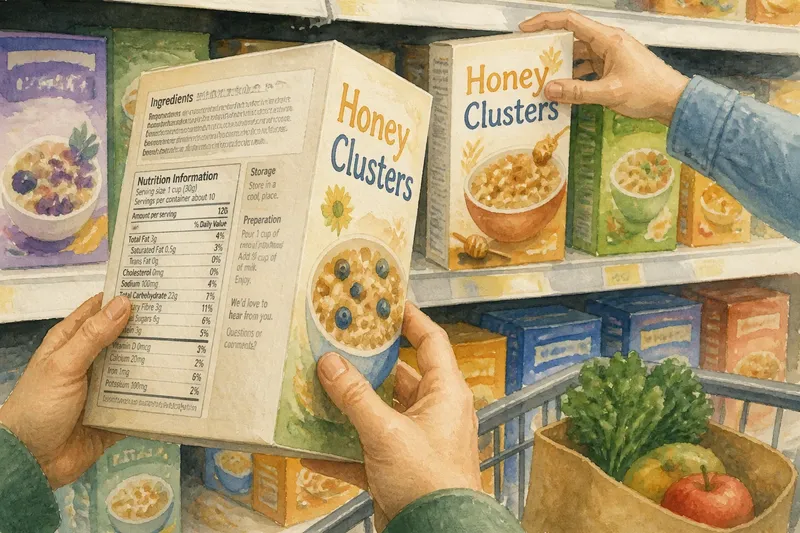
At the grocery shelf, a cereal box turns in your hand while someone reaches past for the same brand. The front names the flavor and shows a bowl; the side panel lists ingredients and nutrition information. Front-of-pack or back panel reading is less about inspecting every line than knowing what each side can tell you.
Product Identity
Start with the product name. It tells you what the package says it contains, while a photograph or serving suggestion may show foods that are not part of the product itself.
Then notice what the design makes prominent: a badge, a phrase, a color, or an ingredient image. Those choices help distinguish the package on a shelf, but they do not all answer the same question. A bowl pictured with berries, for instance, indicates a flavor or serving idea, not the ingredient list.
Panel Roles
The front is useful for identifying the product and its prominent descriptions. The back or side may hold details such as ingredients, nutrition information, storage directions, preparation instructions, and company information. Which details appear depends on the product and applicable labeling rules.
These sections serve different purposes. Ingredients name what is in the food; nutrition information presents listed nutrients and serving information; preparation directions explain how to handle or make it. A claim on the front and a detail elsewhere may relate, but they are not automatically interchangeable.
For a specific dietary or health decision, read the relevant label information carefully. Wording and requirements can vary by product and jurisdiction; if the label leaves an important question unresolved, ask the manufacturer or a qualified professional.
Compare Like Details
When two packages compete for your attention, decide what matters for this choice before comparing them. That could be product type, flavor, an ingredient, or a particular listed detail. Then compare the same kind of information on both packages rather than weighing a broad front phrase against a detailed panel entry.
Say you need crackers for a work snack and are considering two boxes. One front highlights a grain; the other advertises a different feature. You read each product name, check the ingredient lists for the grain you care about, and compare the same nutrition-panel detail on both only if it matters to your choice. If the ingredient appears in one list but not the other, that answers the grain question; the nutrition comparison remains a separate decision. The labels do not settle which crackers you will enjoy, an achievement rarely promised by a side panel.
Which Panel Answers What?
Should I start with the front or back?
Use the front to identify the product and see what the package emphasizes. Turn to the back or side for the information needed to evaluate a specific detail.
Where is serving information listed?
Look in the nutrition information panel for serving information and the values associated with it. A package image may show a suggested portion, but it is not a substitute for the labeled information.
What if a claim seems unclear?
Read its exact wording and identify what it describes; then check the relevant part of the package for context. If the answer affects a health or dietary decision and remains unclear, contact the manufacturer or consult a qualified professional.
What if the panels seem to conflict?
Check the product name and the precise wording on each panel, since statements may describe different aspects of the food. If you cannot resolve a discrepancy that matters to your decision, seek clarification rather than guessing.
Choose Your Reading Depth
A familiar staple may need only a quick check of its name and the detail that matters to you. A new product or one being considered for a particular dietary reason may call for closer reading. The useful stopping point is when you can answer the question you brought to the shelf.
Front-of-pack or back panel reading works best as a division of labor: one side helps identify the product, and the other supplies details for a particular choice. Before leaving the aisle, glance once more at the product name and the relevant panel on the package in your cart; similar boxes have a quiet talent for traveling home together.